AI Data Centre Clusters Cause Urban Heat Islands: UK Implications
Executive summary
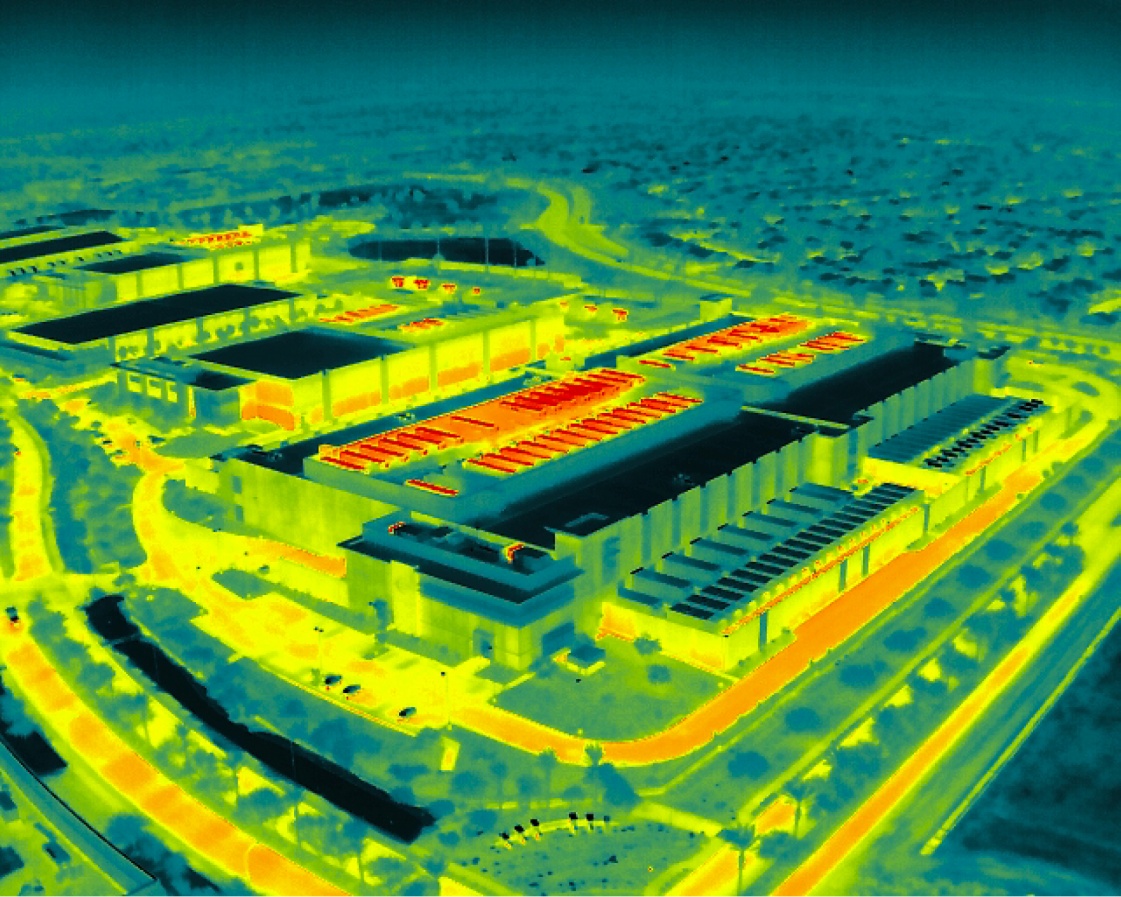
As AI data centres grow in size and cluster in urban areas, they are ejecting significant waste heat into the atmosphere, contributing to the urban heat island effect. Studies in the US show measurable temperature increases downwind from facilities, raising concerns for urban planning and energy consumption in surrounding neighbourhoods.
Reporting based on bloomberg.com
Why it matters
The findings highlight a potential environmental and energy challenge that could be replicated in the UK, particularly as AI infrastructure expands. Localised heating from data centre clusters could exacerbate urban heat island effects, increase cooling demands for nearby properties, and present new considerations for UK planning authorities and grid operators regarding data centre siting and their environmental footprint.
Sector impact
Analysis by AI Energy Intelligence UK
While the article focuses on thermal energy output, it states that a single facility can use over 50 megawatts of electricity. It also notes that virtually all of this electrical power is converted into thermal energy. This suggests that the substantial electricity consumption of AI data centres directly correlates to their significant heat generation, which will place increasing demands on the electricity grid.
For businesses operating near data centre clusters, particularly those reliant on air conditioning, the localized temperature increases could lead to higher energy bills due to increased cooling demands. Data centre developers may face growing community opposition and stricter planning regulations, potentially leading to project delays or cancellations, similar to trends seen in the US.
Consumers residing near AI data centre clusters could experience higher temperatures in their neighbourhoods, potentially leading to increased energy consumption and costs for cooling their homes. Public opposition to data centre development, fueled by environmental concerns like heat, may influence local council decisions on planning applications.
Key statistics
Figures as reported by bloomberg.com. See original source for context.
Quotations
"Put your hand behind your computer and you feel the heat coming off that fan. Now, imagine if you had 1,000 computer [fan] blades in your office — 10,000, 100,000, several hundred thousand blades in your office — that’s the amount of heat that we’re talking about."
"Heat is the most salient issue. But, to be frank, the overwhelming sentiment is just a ‘No.’ Not like, ‘Ah, well, if they can meet this and that and this, that would be OK.’ It’s a ‘No.’"
Long-term implications
The long-term implications include the potential for AI data centre clusters to become significant contributors to urban heat islands, particularly in regions already experiencing climate-change related temperature rises. This could lead to altered local ecosystems, influence rainfall and humidity, and necessitate new urban planning strategies and technological solutions for waste heat management to mitigate environmental and community impacts.
Frequently asked questions
How do AI data centres contribute to urban heat?
AI data centres convert nearly all the electricity they consume into thermal energy (waste heat). This heat is then ejected into the atmosphere, often through rooftop cooling units, creating plumes of hot air that can significantly warm surrounding areas.
What is the 'urban heat island effect' in relation to data centres?
The urban heat island effect refers to cities running hotter than rural areas. Emerging research suggests that the waste heat expelled by clustered AI data centres can become a major contributor to this effect, raising local temperatures and potentially impacting local ecosystems.
Can data centre heat affect residential areas?
Yes, studies have shown that heat plumes from data centres can travel hundreds of metres, leading to detectable temperature increases in downwind residential neighbourhoods. This can potentially result in higher air-conditioning bills for residents.
Are there efforts to mitigate data centre heat issues?
Some data centre operators, such as CyrusOne, design facilities to minimise heat absorption (e.g., reflective roofing) and engineer buildings to recover waste heat where infrastructure allows. However, not all sites have the appropriate infrastructure for heat recycling, and external temperature monitoring is not always conducted by operators.
Explore related tools
Original source
This story summarises reporting from bloomberg.com. Read the original for full context.
Read on bloomberg.comRecommended reports
Independent UK research that expands on the themes in this story.

The environmental cost of AI-generated answers versus conventional search, benchmarked for UK decision-makers. An independent, evidence-based comparison of electricity, water and carbon per query across Google, Gemini, ChatGPT, Copilot, Perplexity and Claude — with forecasts to 2035.
Read the reportThe definitive UK view of AI's electricity, grid and infrastructure impact in 2026. An independent, evidence-based report on demand growth, data centre build-out, AI Growth Zones and the trajectory to 2035 — for UK policymakers, operators and investors.
Read the report
A structured briefing on how artificial intelligence infrastructure is reshaping Britain's power network — from substation bottlenecks to regional investment opportunities and long-term grid risk.
Read the reportGet the UK AI Energy briefing
Analysis on AI, electricity and the UK grid, straight to your inbox.
Related stories
Evidence behind this story
Our reporting sits on top of the UK AI Energy Index and Data Centre Tracker — a sourced, dated record of AI and data-centre electricity demand, data-centre development and grid pressure.