AI Data Centres and the UK Electricity Grid 2026
A structured briefing on how artificial intelligence infrastructure is reshaping Britain's power network — from substation bottlenecks to regional investment opportunities and long-term grid risk.
What this report covers
AI workloads are pushing UK data centre electricity demand to levels the grid was not designed to absorb. This briefing explains grid connection mechanics, substation constraints, regional opportunities, investment forecasts and the policy reforms that will decide which projects connect.
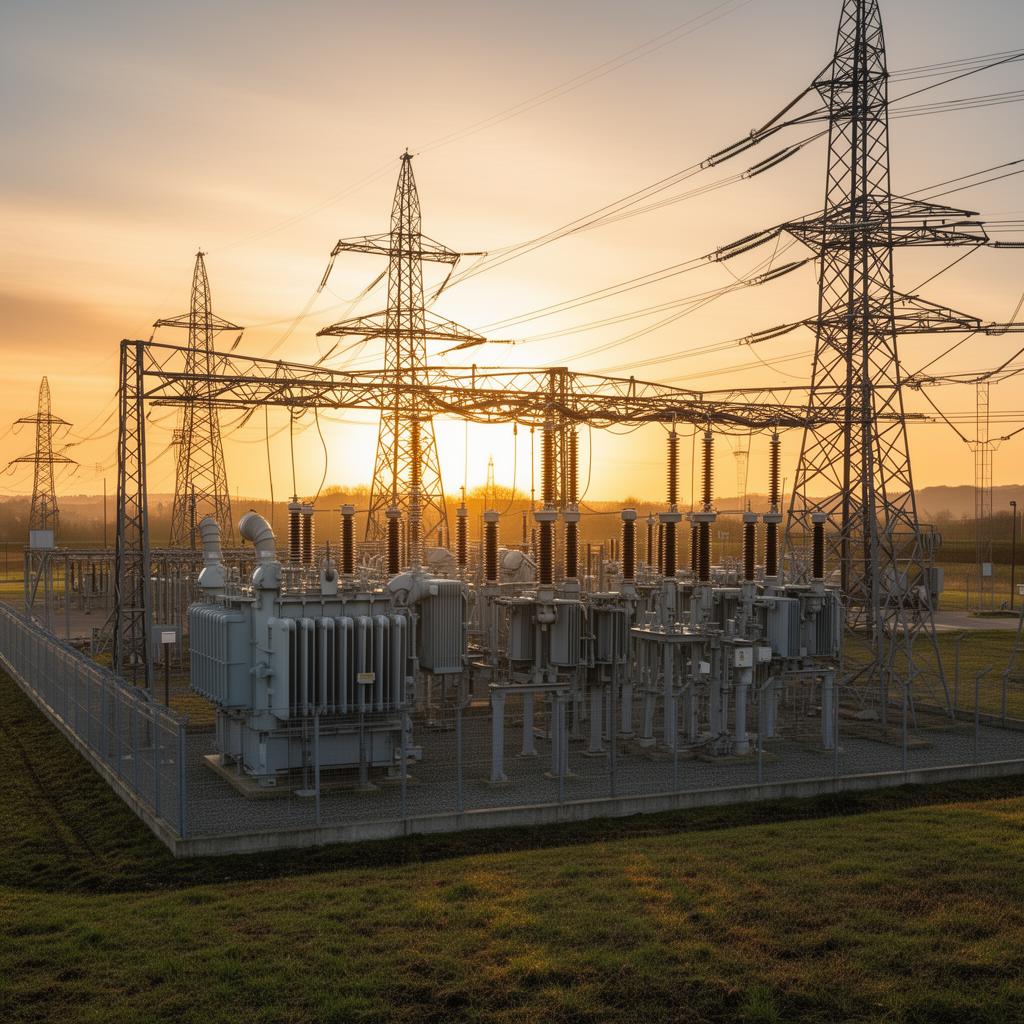
Headline conclusions
- UK data centre IT power capacity is estimated at around 2.9 GW today, with a further 6.2 GW of new capacity expected to be added by 2030. Oxford Economics, The UK's data centre boom.
- Ofgem reports total contracted demand in the GB grid connection queue grew from 41 GW (November 2024) to 125 GW (June 2025) — a measure of contracted connection capacity, not electricity consumed, not exclusively data-centre demand, and not a guarantee every queued project connects; Ofgem itself has flagged concern that a significant share may not proceed. Ofgem proposed data centre connection reforms consultation Separately, NESO's connections reform restructured the broader UK-wide connections queue (covering both demand and generation projects): roughly 217 GW of projects lacking consents or land rights were removed, cutting that total from over 700 GW to around 238 GW under a new readiness-based system, with an estimated 13 GW of demand connecting before 2030 and a further 86 GW between 2030 and 2035. These are two distinct measures on different scopes and should not be read as the same figure before and after reform. NESO connections reform results
- Data centres could account for ~9% of UK electricity demand by 2035, up from 2.6% today. Source needed
- AI Growth Zones are redirecting investment toward regions with available grid headroom and renewable surplus.
Correction — 24 Sept 2026
Replaced the connection-queue finding again: our previous correction incorrectly conflated two different metrics. The 41 GW to 125 GW growth is Ofgem's measure of total contracted demand in the GB grid connection queue; the 217 GW removal and 238 GW total come from NESO's UK-wide connections reform, which covers both demand and generation projects and changed how the queue is counted. The two figures describe different scopes and are not the same number before and after reform. Both are now cited separately in the finding.
Logged in accordance with our corrections policy.
Limitations of this report
- Limited AI workload disclosure: operators publish little about AI-specific energy use, so the briefing's demand projections (such as data centres reaching around 9% of UK electricity by 2035) describe data centres as a whole and cannot isolate the share driven by AI.
- Commercially confidential site figures: capacity estimates for individual projects and regions, including the 2.4 GW to 6.2 GW grid-connected outlook, rely partly on planning documents and operator announcements, because site-level power data is often not disclosed.
- Grid carbon intensity as period averages: the renewables and power-mix discussion uses average carbon intensity over a period, not real-time values, so emissions at particular hours or locations may differ.
- Tariff defaults ageing: the regional electricity pricing section reflects prices available up to mid-2025. Prices move quickly, so readers should check current contracted rates before relying on them.
Adapted from the known limitations in our research methodology.
Intended audience
- Data centre developers and investors
- Grid planners and network operators
- Policymakers and regulators
- Energy and infrastructure analysts
Inside the 20-page report
- 011. The scale of the challenge
- 022. How data centres connect to the grid
- 033. The connection application process
- 044. Why substations matter
- 055. Grid constraints — the bottleneck crisis
- 066. Regional opportunities
- 077. AI Growth Zones — the policy framework
- 088. Investment forecasts
- 099. Key investment projects
- 1010. Grid investment — what is being built
- 1111. The power demand profile of AI data centres
- 1212. Renewables, nuclear and data centre power
- 1313. Flexibility and demand response
- 1414. Regional electricity pricing
- 1515. Investment forecasts — grid infrastructure spending
- 1616. Future risks — grid and system stability
- 1717. Future risks — policy and regulatory
- 1818. The regulatory landscape
- 1919. Summary — key takeaways
Publisher, corrections and disclaimer
Publisher: AI Energy Intelligence UK
Status: Published.
Figures described as forecasts, scenarios or estimates are modelled, not measured. Spotted something wrong? Submit a correction.
Sample pages

Frequently asked questions
What is the main focus of this briefing?+
It explains how AI data centre growth is interacting with UK electricity grid capacity, connection queues, substations and regional investment patterns.
Who is it for?+
Data centre developers, infrastructure investors, grid planners, policymakers and energy analysts who need a concise but complete picture of the sector.
How current is the data?+
The briefing reflects the latest NESO, Ofgem, National Grid and Oxford Economics data available through mid-2025.
Continue exploring data centres research
Download the full report
Enter your email to get the full PDF plus the weekly UK AI energy briefing.
This PDF reflects the original 13 Jul 2026 edition and does not include corrections made since — see the corrections log for what's changed.