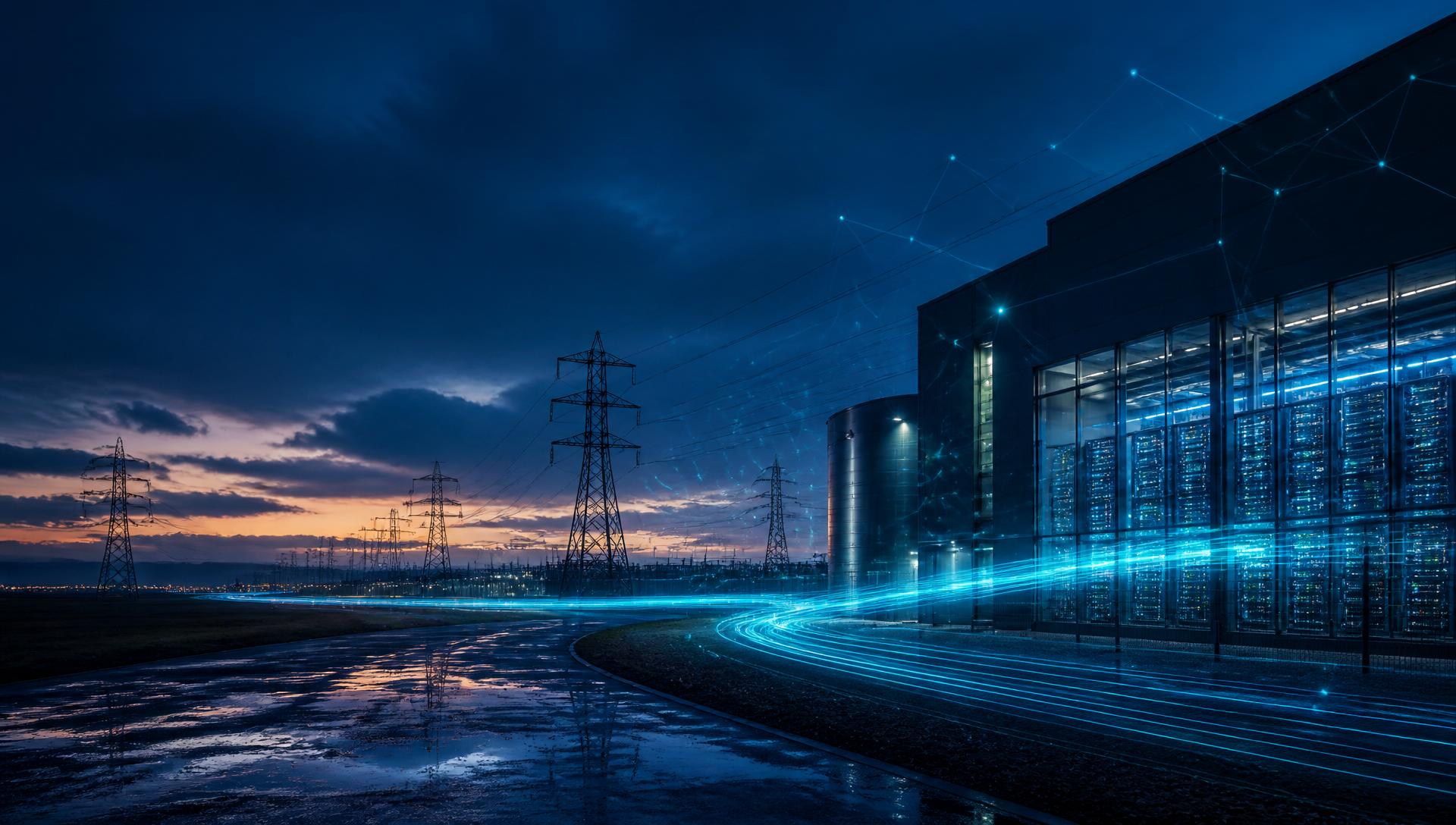
The UK AI, Energy and Cyber Security Hub
The future of Britain's economy will be shaped by three forces that are becoming increasingly connected: artificial intelligence, energy and cyber security.
Artificial intelligence is driving demand for new data centres, increasing electricity consumption and creating new opportunities for businesses and consumers. At the same time, the UK's energy infrastructure must adapt to support this growth while remaining secure against rising cyber threats.
This hub is led by AI Energy Intelligence and connects specialist analysis from PowerGuardian and Energy Sector, including Energy Sector's dedicated cyber security coverage, providing a complete picture of how artificial intelligence is reshaping Britain's energy system, infrastructure and cyber resilience.
How AI is changing Britain's energy future
Artificial intelligence systems require enormous computing power. Every AI model, chatbot, image generator and automation platform relies on servers housed within energy-hungry data centres. As AI adoption accelerates across the UK, questions are emerging about:
- Future electricity demand
- Data centre expansion
- Grid capacity
- Water consumption
- Renewable energy requirements
- Carbon emissions
What this means for household energy bills
Increased electricity demand does not just affect technology companies. It can also influence infrastructure investment, generation requirements and long-term energy costs. Consumers increasingly want answers to questions such as:
- Will AI increase electricity prices?
- Can the UK grid handle future demand?
- How will energy bills change?
- What does this mean for electric vehicles?
- Which suppliers offer the best value?
The industry behind the headlines
Behind every discussion about AI and electricity sits a much larger energy system involving power stations, renewable generation, grid operators, suppliers and regulators. Key questions include:
- Can the UK generate enough electricity?
- How many new data centres are planned?
- Will renewable energy meet future demand?
- What infrastructure investment is required?
- How will the energy market evolve by 2030 and beyond?
Why cyber security is becoming critical
As energy systems become increasingly digital, cyber security becomes just as important as physical infrastructure. Smart meters, EV chargers, energy suppliers, renewable assets and data centres all rely on connected technologies that could become targets for cyber criminals, hostile states or organised groups. Important questions include:
- Could cyber attacks disrupt energy supplies?
- Are smart meters secure?
- How vulnerable is critical infrastructure?
- How is AI changing cyber threats?
- What risks do energy companies face?
Following the full story
Many of the biggest stories affecting Britain now overlap multiple sectors.
- A new AI data centre project may increase local electricity demand.
- That demand could require new energy infrastructure.
- The infrastructure may introduce new cyber security risks.
- The resulting investment costs could ultimately affect consumer energy bills.
Understanding only one part of the story often means missing the bigger picture. That is why these three specialist websites work together to cover the complete journey from technological innovation to consumer impact.
Explore the network
AI Energy Intelligence
Understanding how artificial intelligence affects energy, infrastructure, business and society across the UK.
Visit sitePowerGuardian
Helping consumers understand energy prices, suppliers, forecasts and electricity usage.
Visit siteEnergy Sector
Investigating the UK energy industry, infrastructure and future power requirements.
Visit siteCan Britain deliver enough secure, affordable and sustainable energy to support the AI revolution?
The answer will depend on decisions made across technology, energy policy, infrastructure investment and cyber security. This hub exists to help readers understand all four pieces of that puzzle.