AI Powering UK Clean Energy Transition: From Grid Optimisation to Fusion
Executive summary
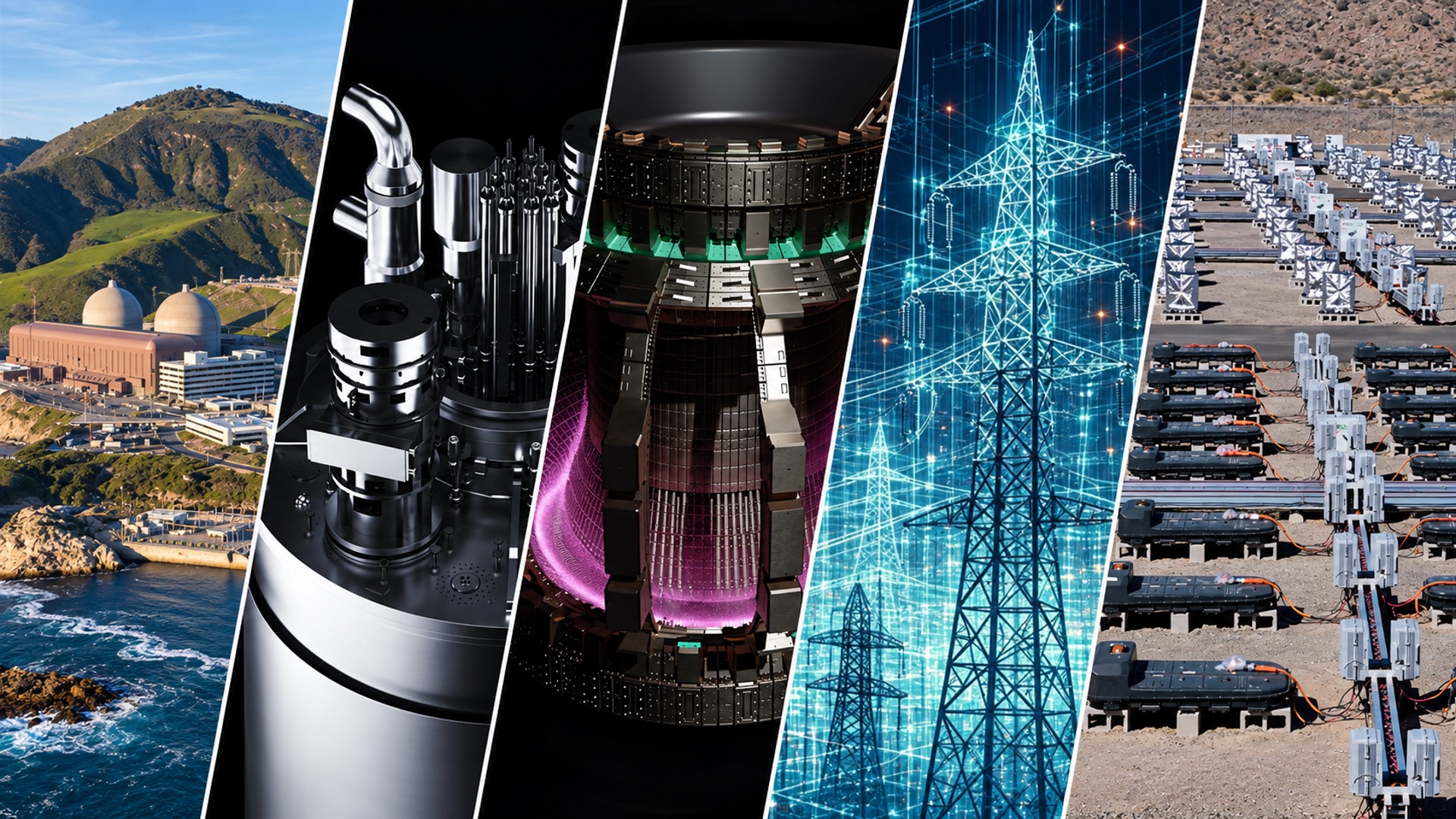
NVIDIA highlights five companies leveraging AI to accelerate clean energy adoption, addressing bottlenecks such as outdated infrastructure and slow research timelines. These innovations range from optimising grid integration and nuclear plant operations to developing large-scale, off-grid power solutions using recycled EV batteries and advancing nuclear fusion. The approaches aim to build a low-carbon energy system, with some directly addressing the accelerating electricity demand from AI factories.
Reporting based on blogs.nvidia.com
Why it matters
For a UK audience focused on AI infrastructure and the energy system, this article demonstrates how AI is being deployed across the clean energy sector to enhance grid resilience, integrate renewables more effectively, and address the growing power demands of AI. The examples, particularly those concerning grid optimisation and novel power solutions, offer insights into potential strategies for the UK to meet its net-zero targets and bolster energy security amidst increasing AI compute needs.
Sector impact
Analysis by AI Energy Intelligence UK
The article reports that Redwood Materials is addressing the acceleration of electricity demand from AI, which is outstripping the pace of new grid infrastructure development. They do this by providing large-scale, off-grid power solutions for AI factories using 100%-recycled electric vehicle batteries, thereby enabling new AI capacity to come online in months instead of years.
Atomic Canyon's AI platform for nuclear plant operations and TerraPower's advanced Natrium reactor design contribute to energy security by streamlining existing nuclear power generation and developing safer, more sustainable new nuclear technologies. Redwood Materials' off-grid battery storage also enhances energy security for AI factories by reducing reliance on the national grid and providing secure, flexible power.
The article details several business innovations enabled by AI. ThinkLabs AI accelerates grid interconnection timelines, reducing evaluation from 30-45 days to two minutes, improving efficiency for clean energy projects. Atomic Canyon's platforms streamline nuclear plant operations, enhancing productivity. Redwood Materials offers a cost-effective, off-grid power solution for AI factories using repurposed EV batteries, lowering power costs and accelerating deployment. TerraPower and Commonwealth Fusion Systems are developing advanced nuclear technologies, aiming for faster deployment and competitive energy costs.
Key statistics
Figures as reported by blogs.nvidia.com. See original source for context.
Quotations
"The grid is getting less and less certain, so the ability to see things not statically, but as a probability — hence all the utility actions — should be risk informed."
"That hits not just reliability objectives, but also affordability, so we know how to maximize and optimize investments."
"Nuclear is a known technology we’ve been doing for 50 to 60 years, but the way we’ve been doing things simply will not scale to meet the moment that’s in front of us; it needs to be reinvigorated by artificial intelligence."
"Using these batteries with our power electronics and systems control software, you can make a highly responsive power source that can deal with the novel fluctuations of AI training."
"Twenty years ago, our founders, including Bill Gates, realized that emissions avoidance should also be a part of this energy solution."
"With fusion, there’s no running out of control."
"It is passively safe, since the default mechanism is shutting itself down."
"We will be able to build a first-of-its-kind plant that will be cost-competitive with both renewable and nonrenewable sources of energy."
Long-term implications
The long-term implications involve a more robust, efficient, and decarbonised energy system capable of supporting significant AI infrastructure growth. AI-driven grid optimisation, advanced nuclear technologies, and innovative battery storage solutions could lead to a stable, low-carbon energy supply, faster integration of clean energy sources, and potentially lower overall energy costs as these technologies mature and scale, ultimately facilitating a more rapid transition away from fossil fuels.
Frequently asked questions
How is AI improving grid management?
ThinkLabs AI uses digital twins and agents powered by NVIDIA CUDA to simulate grid conditions and identify solutions, reducing the time required to evaluate grid interconnection applications from 30-45 days to two minutes, thereby speeding up clean energy integration and optimising the grid for variability.
Can AI help with nuclear energy production?
Yes, Atomic Canyon employs NVIDIA-accelerated AI platforms (Neutron and NIVA) to streamline nuclear power plant operations by converting operational data into a knowledge layer. TerraPower uses an NVIDIA Omniverse-powered platform to create digital twin software, accelerating the siting and delivery of future Natrium reactors from years to months.
How are AI factories addressing their increasing energy demand?
Redwood Materials is tackling the accelerating electricity demand from AI by providing large-scale, off-grid power solutions. They repurpose 100% recycled electric vehicle batteries, integrated with an AI intelligence layer running on the NVIDIA Blackwell platform, to provide real-time adaptable power directly to data centres, reducing reliance on the main grid and lowering costs.
What is AI's role in advancing fusion energy?
Commonwealth Fusion Systems (CFS) leverages NVIDIA Omniverse libraries and OpenUSD to compress years of experimentation into weeks for its SPARC tokamak demonstration fusion machine. This AI-driven simulation helps in replicating the sun’s power source on Earth, accelerating the development of carbon-free, passively safe fusion energy.
Explore related tools
Original source
This story summarises reporting from blogs.nvidia.com. Read the original for full context.
Read on blogs.nvidia.comRecommended reports
Independent UK research that expands on the themes in this story.
The environmental cost of AI-generated answers versus conventional search, benchmarked for UK decision-makers. An independent, evidence-based comparison of electricity, water and carbon per query across Google, Gemini, ChatGPT, Copilot, Perplexity and Claude — with forecasts to 2035.
Read the reportThe definitive UK view of AI's electricity, grid and infrastructure impact in 2026. An independent, evidence-based report on demand growth, data centre build-out, AI Growth Zones and the trajectory to 2035 — for UK policymakers, operators and investors.
Read the report
Independent analysis of the UK's best value energy suppliers for households in 2026 — covering tariffs, customer service, green energy, switching value and the July Ofgem price cap.
Read the reportGet the UK AI Energy briefing
Analysis on AI, electricity and the UK grid, straight to your inbox.
Related stories
Evidence behind this story
Our reporting sits on top of the UK AI Energy Index and Data Centre Tracker — a sourced, dated record of AI and data-centre electricity demand, data-centre development and grid pressure.